
How Do Porta Potties Work?
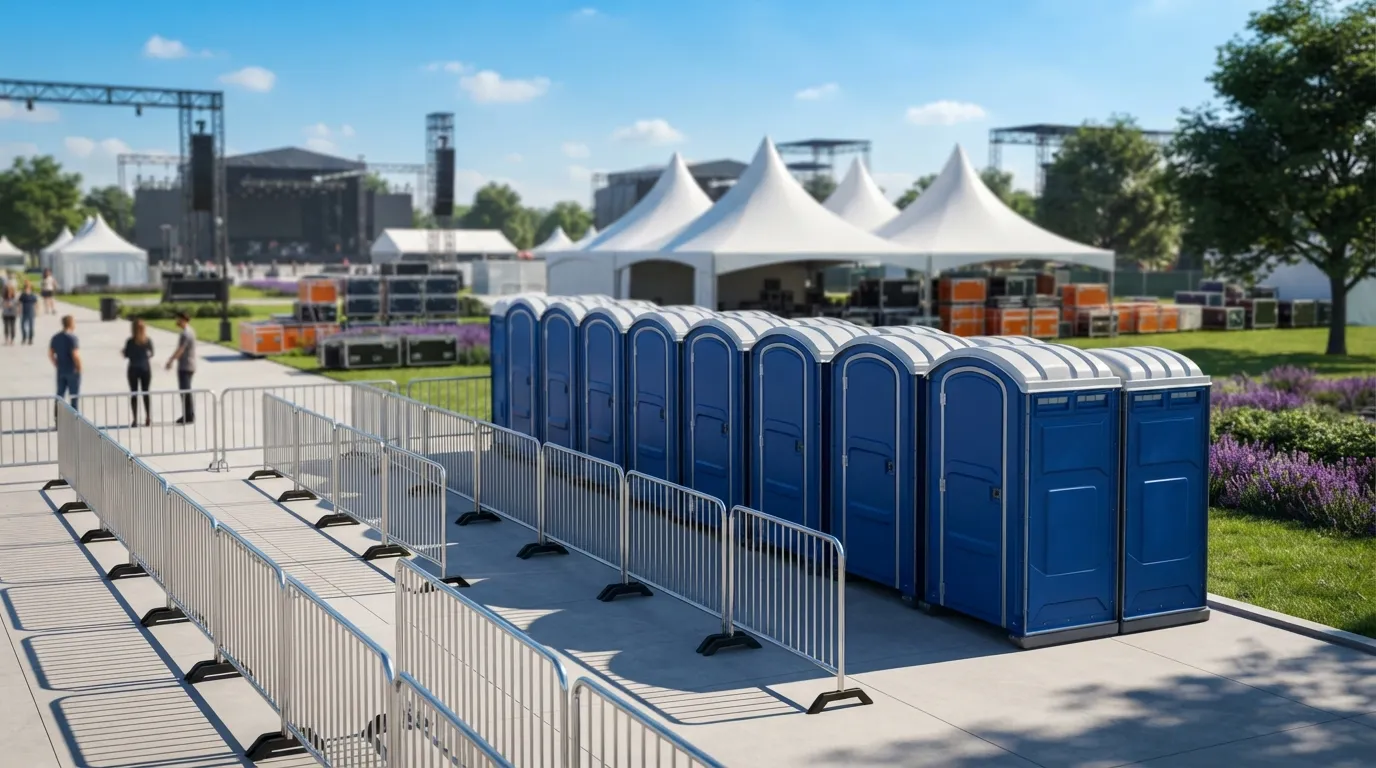
The unit is a sealed box over a tank. You sit, you go, the waste drops into the tank below and stays there until the truck comes. No plumbing runs to it. That is the whole appeal of a standard porta potty rental: it works anywhere, from a McGregor backyard remodel to a jobsite 6.9 miles east near Lochmoor Waterway Estates. Inside the tank, a blue chemical deodorizer breaks down waste and knocks back odor between services. Techs top off that fluid every visit. ANSI/PSAI Z4.3, the industry standard for portable sanitation service, sets one visit per week for up to 10 users across a 40 hour week as the baseline pump-out interval. Busier sites need more frequent stops, which is why porta potty rental cost in Cape Coral shifts with usage, not just headcount. A vent stack pulls odor up and out rather than back into the stall. There is no water tank, no flush handle on a standard unit, and that is the tradeoff for a toilet that sets up anywhere in under an hour. For OSHA-covered jobsites, 1926.51(c) sets the ratio: one toilet for 20 or fewer workers, scaling up from there. Our OSHA portable toilet requirements page breaks that ratio down by crew size.
How Do Flushable Porta Potties Work?
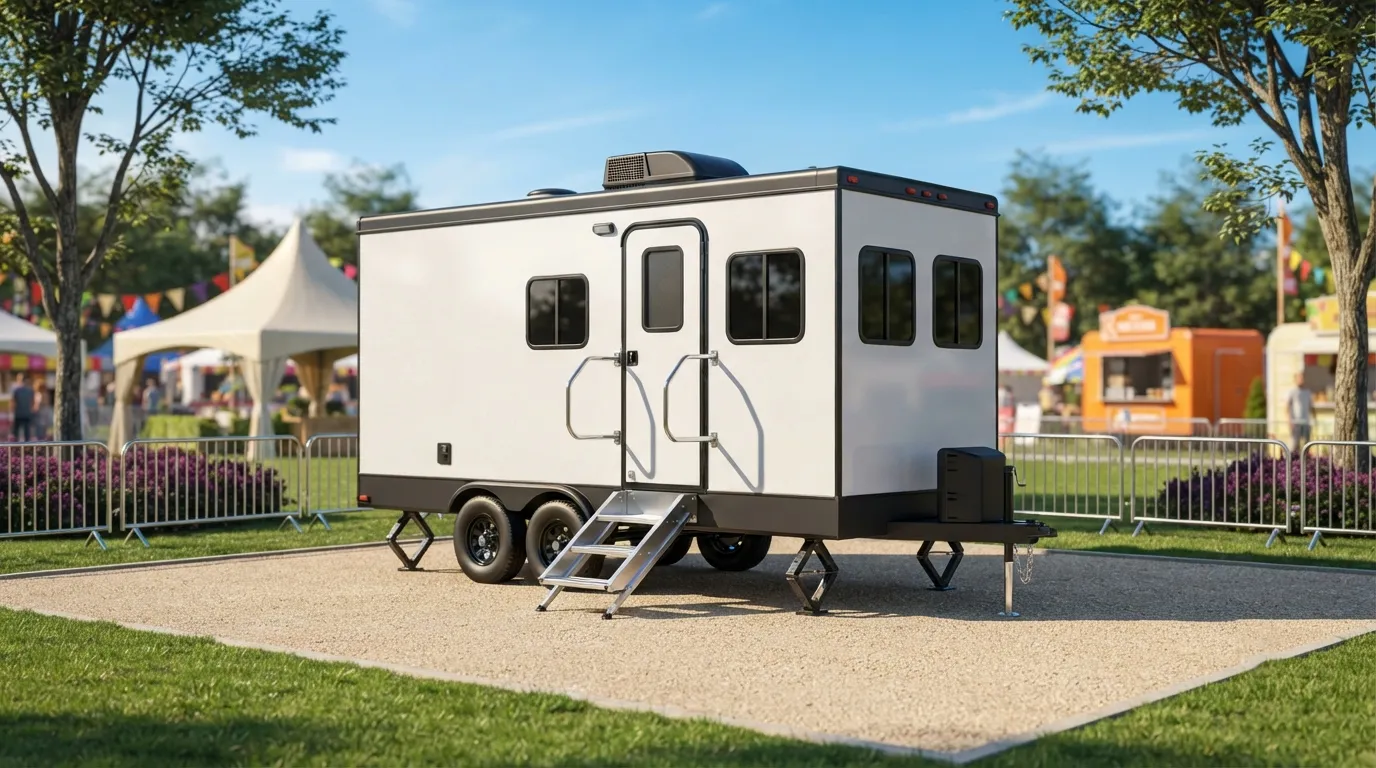
A deluxe flushable unit adds a small onboard freshwater tank and a foot pump or hand pump that pushes a rinse of water into the bowl after each use, cutting odor and buildup compared to a chemical-only standard unit. It still drains into the same holding tank below. Nothing goes to a sewer line. The deluxe flushable porta potty is the step up from standard for weddings, office staff, and anyone who wants the unit to feel closer to a real bathroom. Restroom trailers go further, with a true flush toilet, running water, and a holding tank that a technician pumps on the same rotation as a septic tank. A restroom trailer rental makes sense for multi-day events in Cape Coral where guest count and comfort expectations are higher, and our 2 stall restroom trailer and 4 stall restroom trailer options scale with crowd size. ADA Standards section 403.5.1 requires a 36 inch clear route to any accessible unit, and section 404.2.3 sets the minimum door opening at 32 inches, both relevant when a trailer or an ADA accessible porta potty sits on a paved lot versus grass.
How Does a Portable Sink Work?
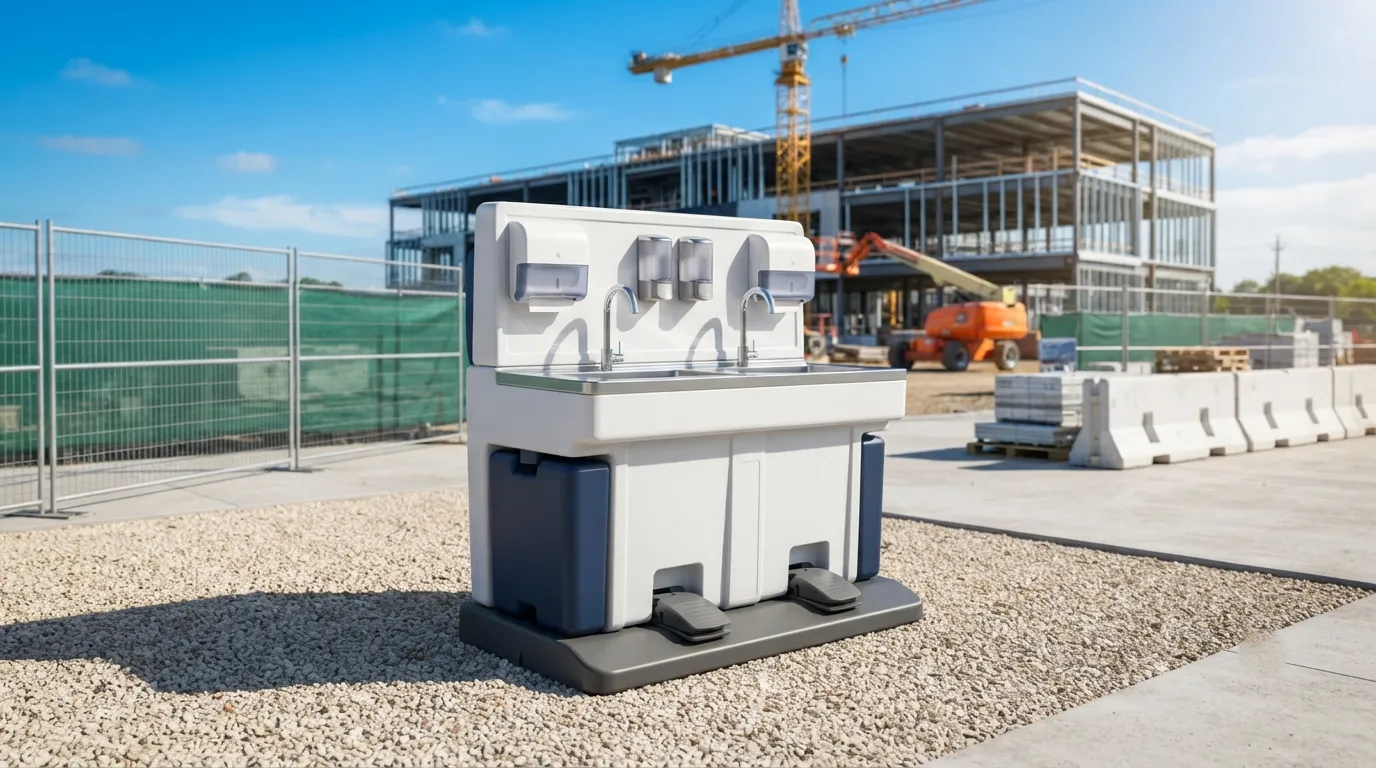
A portable sink runs on the same no-plumbing logic as the toilet: a freshwater tank feeds the faucet, either by foot pump or battery pump, and gray water drains into a holding tank underneath instead of a drain line. There is no hot water heater and no sewer tie-in. 29 CFR 1910.141(d)(2) requires washing facilities to have soap and towels or a hand-drying device, and hand sanitizer alone does not satisfy that. That is why a proper handwashing station rental or portable sink rental matters for any crew doing real work, not just standing around. On a construction site, OSHA 1926.51(f)(1) requires washing facilities specifically where crews apply paints, coatings, herbicides, or insecticides, so a renovation job using these products needs a sink near the porta potty, not just the toilet itself. Agricultural crews fall under a different rule: OSHA 1928.110 requires field sanitation with potable water, toilets, and handwashing within a quarter mile walk of hand-labor employees, one facility per 20 workers. See farm and agricultural restrooms for how that plays out on Lee County ag sites.
Why Do Porta Potties Smell, and How Is That Fixed?
Odor comes from bacteria breaking down waste in the tank, and it builds fastest in heat, which matters in Cape Coral more than most places. Regular pump-outs and a properly dosed deodorizer chemical keep it in check. Skipping a scheduled service, or overloading a unit meant for fewer users, is what causes a bad smell, not the toilet itself. Our do porta potties smell page covers the chemistry in more detail, and how often are porta potties cleaned lays out realistic service intervals for job sites and events. A grease interceptor, by comparison, gets pumped once fats, oils, grease and solids reach 25 percent of the liquid depth, a completely separate system covered under grease trap pumping. A residential septic tank runs on its own schedule too, typically pumped every 3 to 5 years depending on tank size and household size, detailed on how often to pump a septic tank and septic tank warning signs. None of these systems share plumbing with a rented porta potty, which is exactly why the unit can drop into a gravel lot 9.3 miles west near Pine Island Center with zero site prep.
How long does a porta potty tank last between services?
ANSI/PSAI Z4.3 sets the baseline at one weekly service for up to 10 users over a 40 hour week. Heavier use, hot weather, or events shrink that window fast. Cape Coral Porta Pros builds the service schedule around your actual headcount, not a guess.
Do porta potties need electricity or water hookup?
No. Standard and deluxe units run entirely without electric or water lines, using a holding tank and chemical deodorizer. Restroom trailers and some handwashing stations carry their own onboard tanks and battery power instead.
Can a construction worker use a porta potty during a shift break?
Yes, and OSHA 1926.51(c) requires it: one toilet for crews of 20 or fewer, scaling up from there. Placement near the work area matters so a construction worker isn't running across the site to reach one.
What chemicals are used to keep a porta potty clean?
A blue holding-tank deodorizer breaks down waste and suppresses odor between pump-outs. It's different from septic tank cleaning chemicals, which target a home's underground tank, not a rented unit's portable holding tank.
How do camping porta potties work differently from job site units?
They work the same way mechanically, tank and chemical below a seat, but camping setups often use smaller units placed on soft ground. See camping porta potty for placement tips specific to Cape Coral terrain.
Next step
Get a delivery date
Tell us the address, the dates and the headcount. We size the order and confirm the route.