
How many restrooms does a marathon need in Cape Coral?
Start with runner count, then divide by course miles, not by finish-line crowd size. A field of 2,000 spread across a 26.2 mile loop needs restrooms staged at aid stations roughly every 2 to 3 miles, plus a bank of units at the start/finish corral. OSHA 1926.51(c)(1) sets crew ratios for construction sites, not spectator events, but race directors in Cape Coral use similar math: 1 unit per 20 crew or volunteer staff, then a separate spectator count layered on top. A typical setup runs standard units at the $200 to $400 event-day range, with ADA-compliant units added at every cluster per the 5 percent minimum. Spectator zones near a named venue, if the course runs through downtown, will pull heavier traffic than mile 18 out on a quieter stretch. Add handwashing stations at every aid station where volunteers handle food or drinks, since race organizers often run water tables that touch 29 CFR 1910.141(d)(2) standards even without a strict mandate. If your race also has a post-run festival, plan for event restroom rental numbers that match a festival crowd, not a runner headcount. Courses that loop back through residential streets in Cape Coral need placement that keeps units off sidewalks and clear of drainage grates. We plan routes block by block, matching unit density to where runners actually slow down: aid stations, hydration tents, medical tents.
Where do restrooms and support equipment go along the course?
Placement follows water, shade and turn points, not a flat grid down the route. Curves, hill crests and aid stations draw the heaviest foot traffic, so units cluster there instead of spreading evenly. A single restroom trailer or bank of standard units at the finish line handles the crowd that lingers after runners cross. If timing tents or medical stations need power at night starts, a temporary power pole has to sit on stable, level ground, braced against wind and against runners bumping the base as they pass. Knowing how to brace a temporary power pole matters here: anchor the base plate with the manufacturer's ground stakes or ballast blocks, keep guy wires taut at three points spaced evenly around the pole, and route cords through covers so nobody trips crossing the course. Light towers at pre-dawn starts need the same bracing logic: stable footing, no loose cable underfoot. Course marshals near Matlacha, roughly 5.6 miles west of the main Cape Coral loop, or crews staged toward Pine Island Center 9.3 miles west, may need a satellite restroom cluster if the route extends that far. Keep temporary fencing along chute entries to funnel runners past restrooms without bottlenecking, and rope off equipment zones per OSHA 1926.202 barricade guidance. A crowd control barrier works well at the finish corral where volunteers need a clear lane.
Do race restrooms need to be ADA accessible?
Yes, and it is not optional at any staging point where the general public gathers. ADA Standards section 213.2 requires at least 5 percent of clustered single-user units be accessible, with a minimum of one per cluster regardless of size. That means even a small three-unit bank at mile 9 needs one ADA unit, not just the start/finish area. Accessible units need a 60 inch turning circle inside per ADA Standards section 304.3.1, and the door opening has to clear at least 32 inches per ADA Standards section 404.2.3. The path leading to the unit matters too: a firm, stable surface per ADA Standards section 302.1, with a route at least 36 inches wide per ADA Standards section 403.5.1. If ramps are needed to reach a unit set on uneven turf, slope cannot exceed 1:12 under ADA Standards section 405.2. We coordinate placement with race directors ahead of permit review, since Cape Coral events staged in public parks or along public roads should confirm placement in the right of way directly with the city; check current requirements through porta potty permit requirements before locking your site map. A deluxe flushable unit near VIP or medical tents gives staff a better option than a standard unit.
| unit | duration | typical price |
|---|---|---|
| standard | event | $400 |
| ada | day | $230 |
| deluxe | day | $300 |
| dumpster | weekend | $440 |
Post-race cleanup often needs a roll-off dumpster for course debris and vendor waste, plus a handwashing station near any food trucks. For full event planning, see event restroom rental or check porta potty rental cost for daily and weekly comparisons.
How far in advance should we book race restrooms?
Book 4 to 6 weeks ahead for a marathon-size event, longer if it overlaps a holiday weekend. Cape Coral race season fills fast, and ADA units are limited stock. Early booking also gives us time to walk the course and finalize placement per aid station.
Can restrooms be moved once the course is set?
Yes, but plan the moves before delivery day. Units placed on turf or gravel can shift between packet pickup and race morning if a route changes. Tell us your final course map at least a week out so placement matches actual aid station locations.
What size crew handles restroom setup and teardown?
A marathon-scale event usually needs a two- to three-truck crew for delivery and a similar crew for same-day teardown. Timing depends on unit count and how spread out your course is across Cape Coral streets and parkland.
Do we need handwashing stations separate from restrooms?
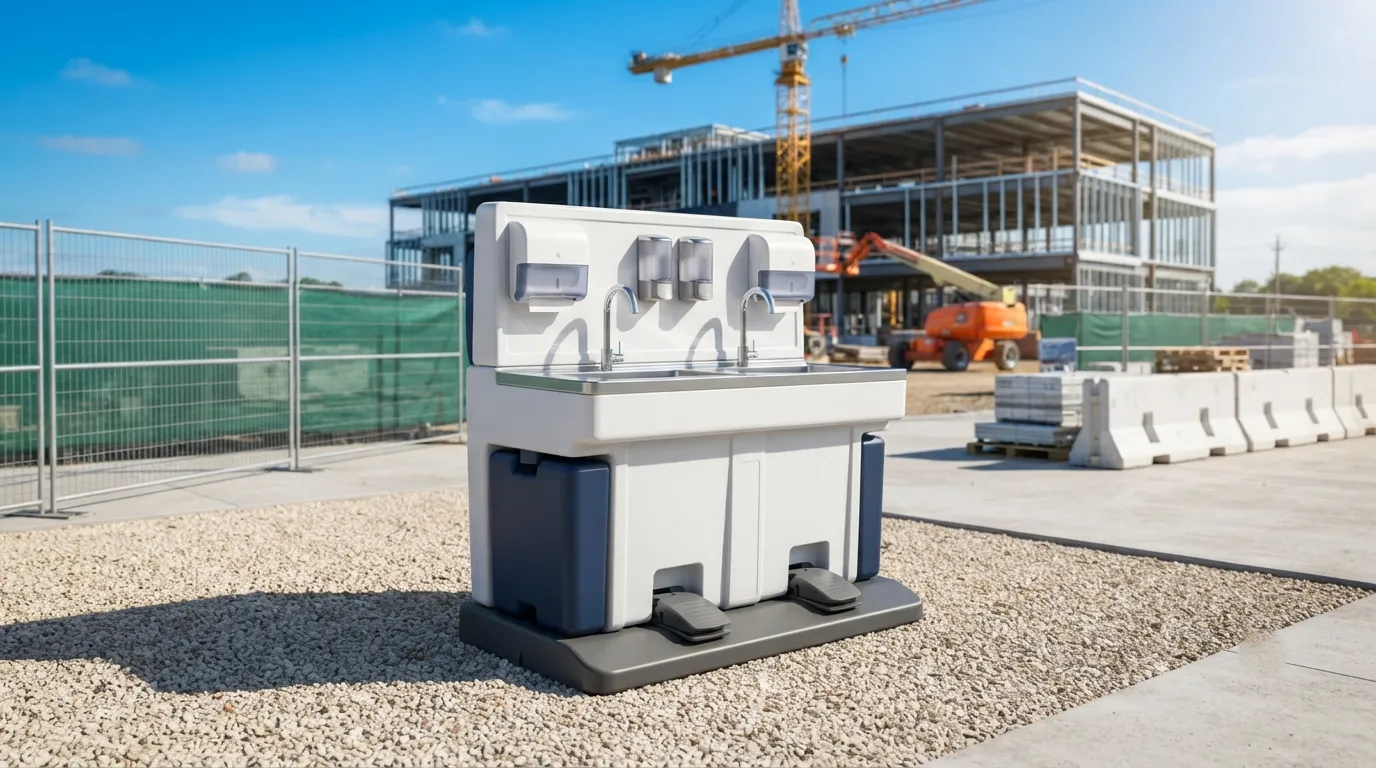
Yes, especially at aid stations and food areas. 29 CFR 1910.141(d)(2) calls for soap and towels, not just sanitizer, anywhere volunteers handle food or drinks for runners passing through.
How do restrooms get serviced during a race?
Units get serviced before the race starts and are checked again post-race. For a one-day event, this is typically a single pre-event service visit, following the baseline service interval described in ANSI/PSAI Z4.3.
Next step
Get a delivery date
Tell us the address, the dates and the headcount. We size the order and confirm the route.